
Why India, why now.
The forces shaping India's clean-energy decade — and why they point to energy that is stored, shared with farmland and built around industry.
Eight numbers that explain the opportunity.
India is adding clean power faster than almost any country, while demand sets new records and industry goes digital. The constraint is shifting — from building capacity to delivering dependable, affordable clean energy at the right hours, on land the country also needs for food.
Non-fossil power capacity India has committed to by 2030 — on the path to net zero by 2070.
Source: Govt. of India (PIB)Non-fossil sources now make up more than half of India's installed capacity — about 54% as of July 2026.
Source: MNRE, via Industry OdishaAn all-time high on 21 May 2026 — with shortfalls concentrated in the hours when solar is not generating.
Source: Ministry of Power data, via Down To EarthUp from 2.2 GW in 2025. Reliable, affordable power is now the sector's biggest constraint.
Source: Wood Mackenzie, July 2026Battery storage supported by a ₹5,400 crore national scheme to help serve evening peaks.
Source: Ministry of Power, via SolarQuarterCompressed biogas share required in city gas (CNG and piped gas) by 2028–29, rising from 1% in 2025–26.
Source: Govt. of India (PIB)India's next gigawatts of clean energy will have to share ground with agriculture.
Source: World Bank (2023), via Trading EconomicsThreshold for buying green power directly — lowered from 1 MW, opening clean energy to far more businesses.
Source: Govt. of India (PIB), 2022Three gaps. Three answers.
Each of these trends opens a gap that conventional development leaves behind. GEM is built around closing them.
Peaks and shortfalls fall in the hours solar can't reach. Storage turns daytime sunlight into evening supply.
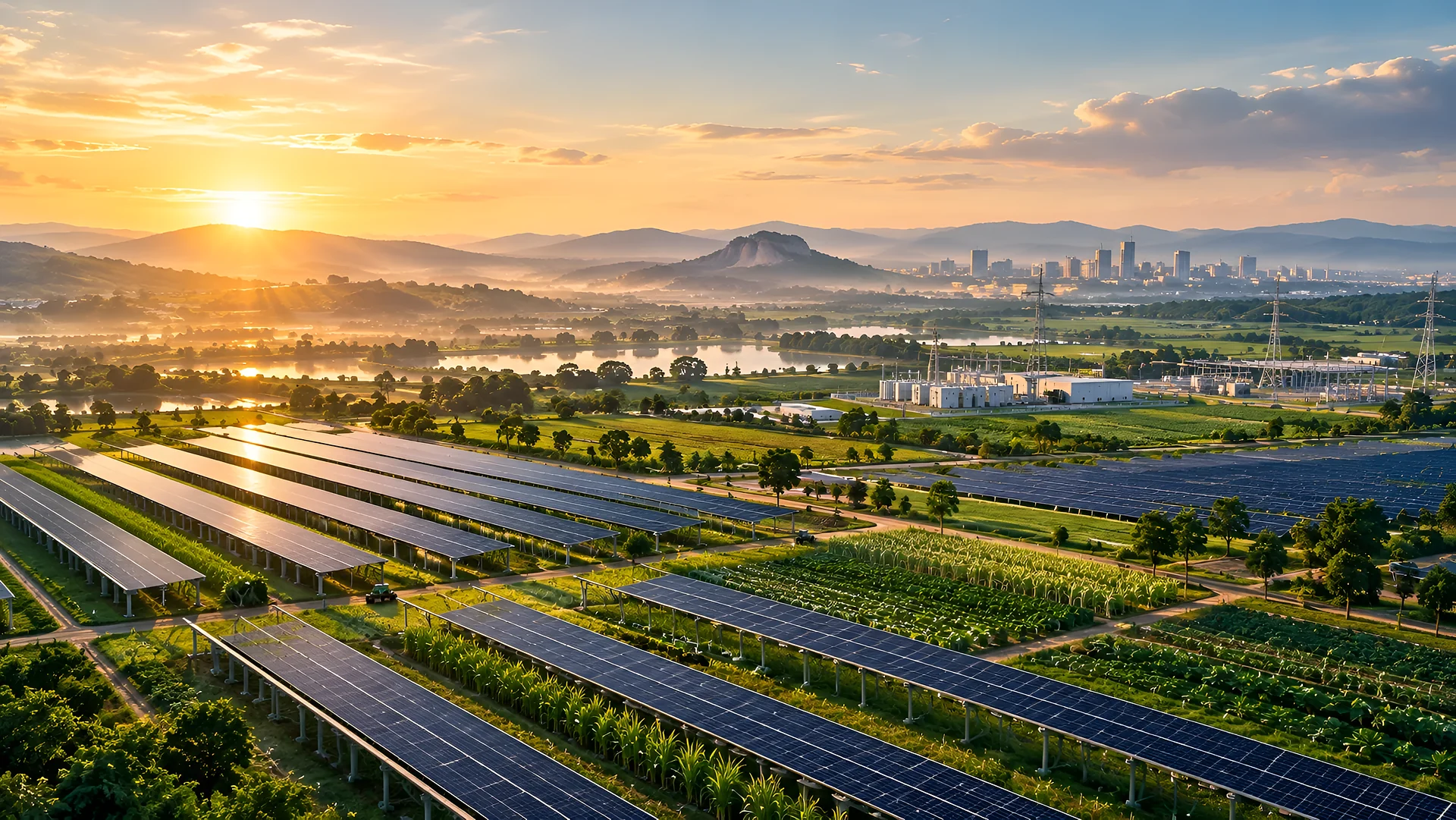
Energy platform On working landEnergy that shares the fieldWith most land already farmed, new capacity has to coexist with agriculture. Agrivoltaics lets one acre do both.
Agrivoltaics Beyond electronsMolecules, grown not minedA national biogas mandate is creating demand for renewable gas — produced from cultivated biomass.
Renewable fuelsFigures are published government and third-party data, linked to each source — not GEM projections. Last reviewed October 2026.